For operators
About 2× the coverage of a spray drone, from one pilot.
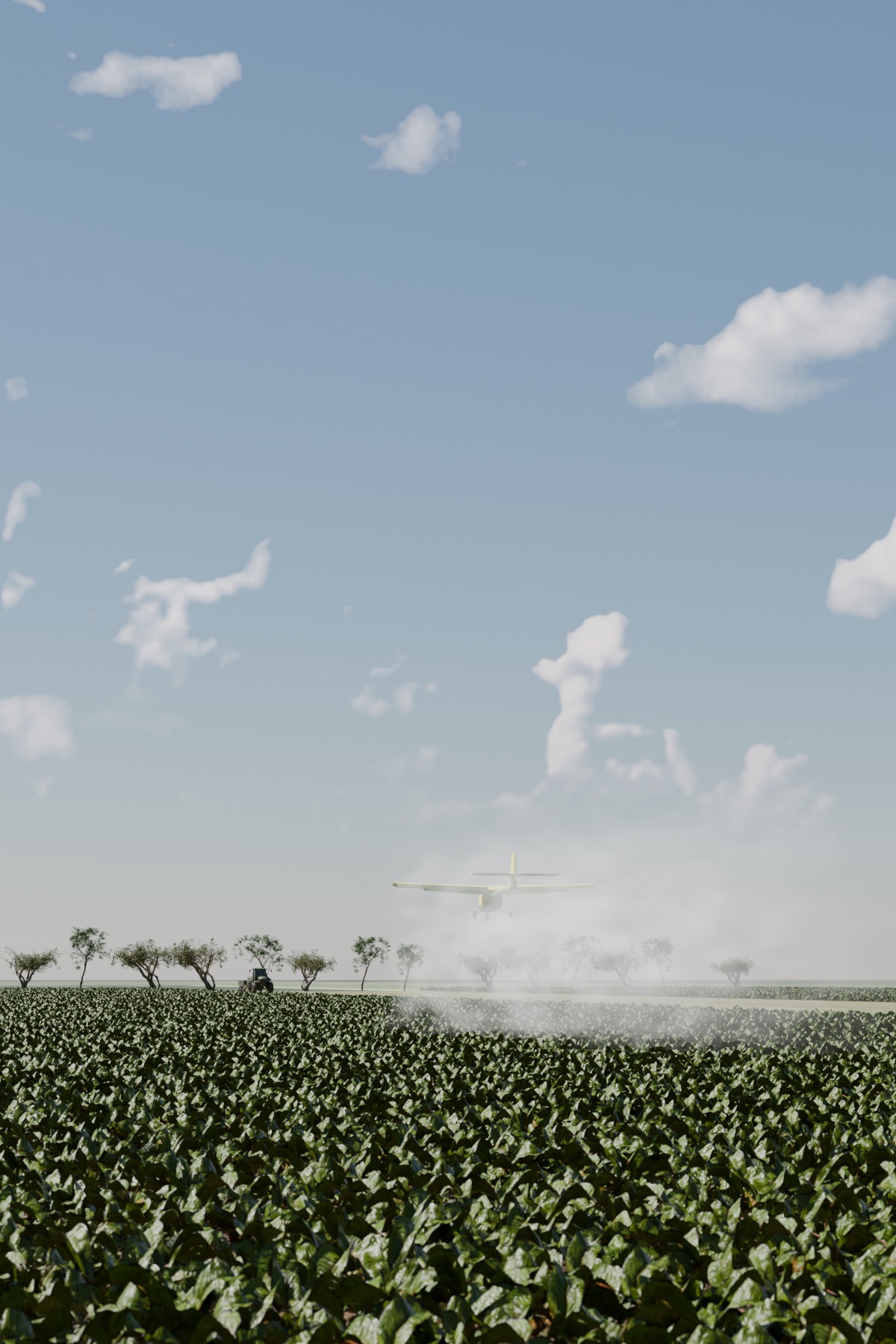
For operators
About 2× the coverage of a spray drone, from one pilot.
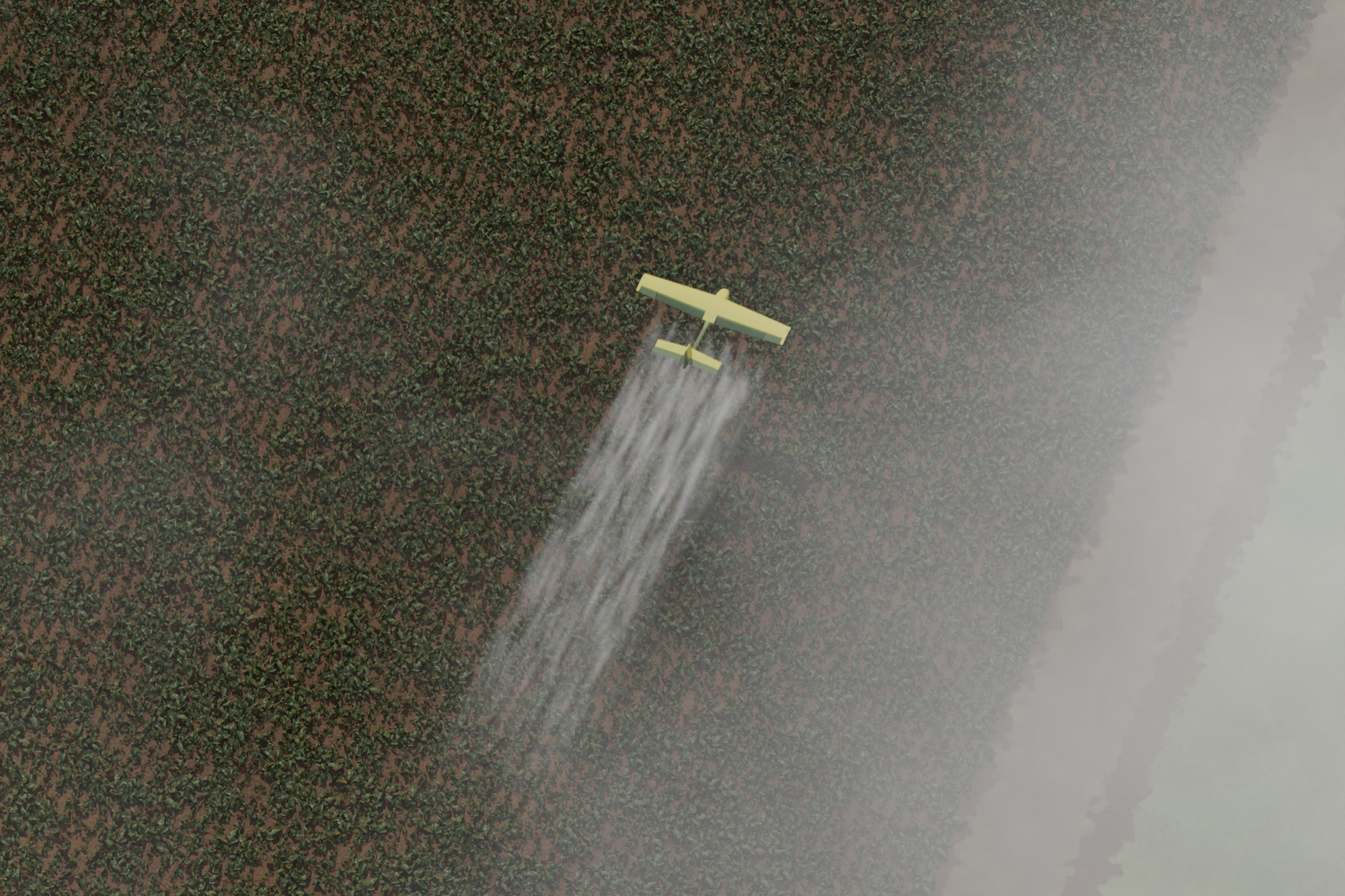
For farmers
Your spray window met, at a lower cost per acre than a crop duster.
Assumed estimatesEstimated acres in one day shift, scaled to the crop duster.Crop duster. A popular Air Tractor AT-502B covers ground fast: in a full day it covers about 2,000 acres, flying in from an airstrip with a pilot aboard.Spray drone. Even the largest, the DJI Agras T100, manages about 70 acres an hour. Short flights, a short reach from where it is staged, and a battery swap every load hold it back.Our system. Airplane reach with drone simplicity: it works from the field edge, one operator runs it, and every refill is minutes away, not an airstrip away.At night. Crewed night spraying is legal but rare: flying a few feet over a crop in the dark is hard on a pilot, so most crop dusters park at sunset. With no one aboard, the FAA already grants spray-drone operators night flight, and those hours come on top of the day.
Crop dusters cover big ground fast, but they need a pilot and an airstrip, and they only pay off on substantially big acreage.
Drones are flexible and affordable, but one drone covers little ground: a 400-acre farm can take about 30 battery swaps.
Our system covers 2× a drone’s ground at a lower cost per acre than a crop duster. Big-plane coverage with drone convenience.
After dark, most crop dusters park. Uncrewed, we keep flying. A short night shift takes us past 80% of a crop duster’s full day, with no one aboard.
2×the coverage of a spray drone, at our target speed1
25%+lower cost per acre than a crop duster2
3×the return on every dollar invested, against a crop duster (estimated)2
Illustrative model estimatesEach at a typical season: a spray drone 9,600 acres at 59 acres an hour; a crop duster 45,000 acres at 200; ours 37,500 at 111 (a design estimate, not yet flight-tested), the same 75% of its available hours as the crop duster.Cost per acre is the operator’s all-in cost: the aircraft spread over its life, crew, upkeep, insurance, and fuel or charging. Chemical excluded. Return is a season’s profit per dollar of aircraft, without financing.Sources: (1) DJI Agras T100, American Spray Drone Coalition 2025 Impact Survey; (2) Air Tractor AT-502B, National Agricultural Aviation Association (NAAA). Ask us for the numbers on your acres.
Features
We are looking for launch operating partners.